
Not merged yet. H3 support is only in
miles-diffusion#154 and
sglang-diffusion#34365.
Neither repo has it on main. After a normal install, follow Setup to
move both checkouts onto those PRs.
1. Model introduction
MiniMax-H3 is MiniMax’s omni-modal generative system: one transformer denoises a packed text + video + audio sequence and emits video with native stereo audio. MiniMax distilled CFG into the checkpoint, so the official setting has no classifier-free guidance — the recipe is unguided (--diffusion-guidance-scale 1.0). The unmerged PR trains the t2va (text-to-audio-video) workflow, video
branch only — the audio stream is rolled out but not trained.
2. Supported variants
3. Setup
H3 is not onmain of either repo. Finish Installation first
(Docker image or from source), then move both halves onto the open PRs — a main trainer
against a main engine will not run this recipe.
Paths below match the Docker image (
/root/miles_diffusion, /sgl-workspace/sglang).
4. Launch
The 2-GPU recipe lives on PR #154, notmain:
scripts/run_diffusion_grpo_h3_t2va_2gpu.py — 2 colocate GPUs, reward colocated, 16:9 / 4 s
(sglang pins short_edge=768, so the canvas is 1344×768 / 107 frames). Requires --use-lora --lora-ipc-weight-sync
(the recipe already sets both).
Status: 📈 V — Verified, based on the complete run reported on PR #154.
The command does not exist on main.
main.
5. Reference results
2-GPU long run from PR #154 (rollout_batch_size=4, n_samples_per_prompt=16):
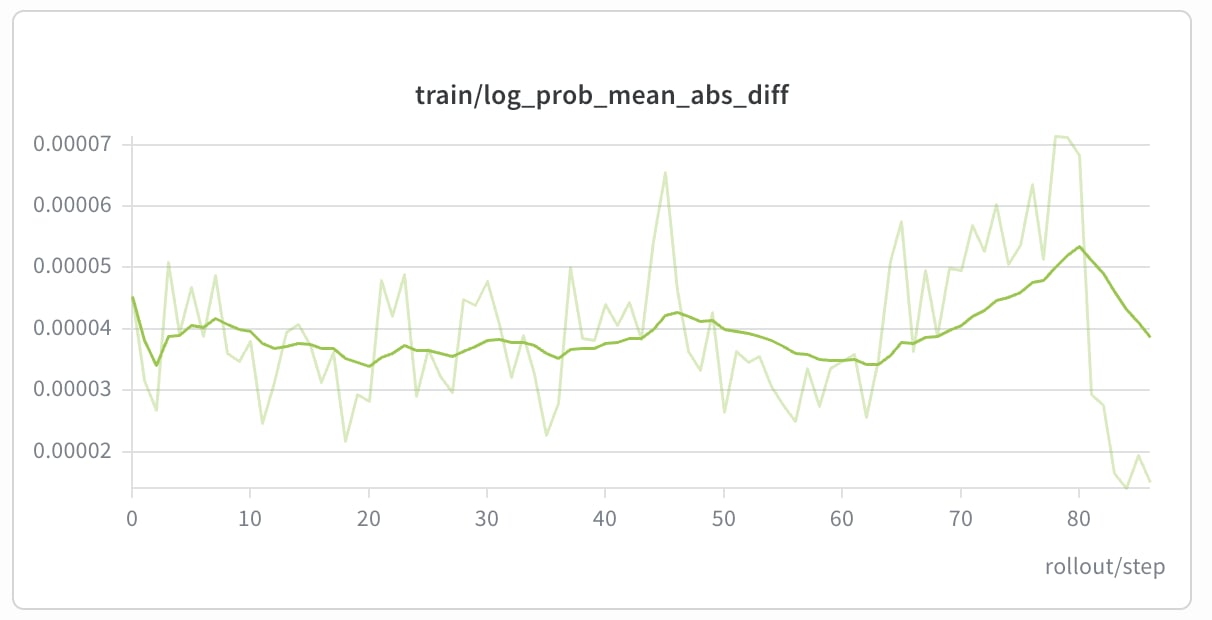
train/log_prob_mean_abs_diffstays in 1.4e-5 .. 7.1e-5 (under1e-4).- Eval PickScore (
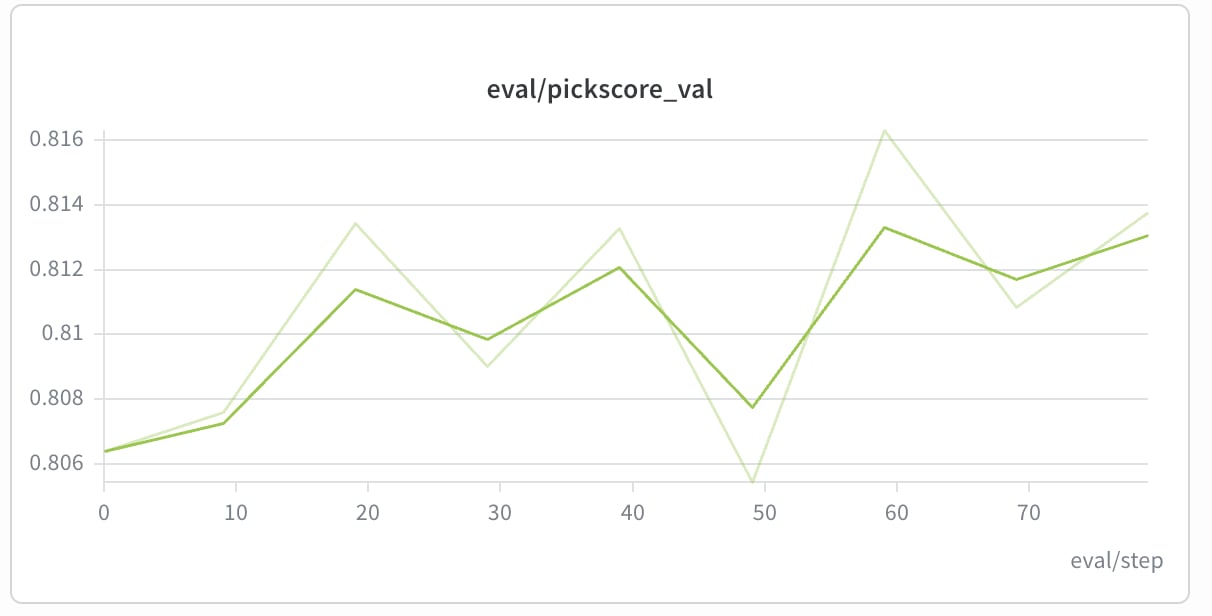
eval/pickscore_test, every 10 rollouts): 0.806 → 0.814, peak 0.816 at step 59. - Train
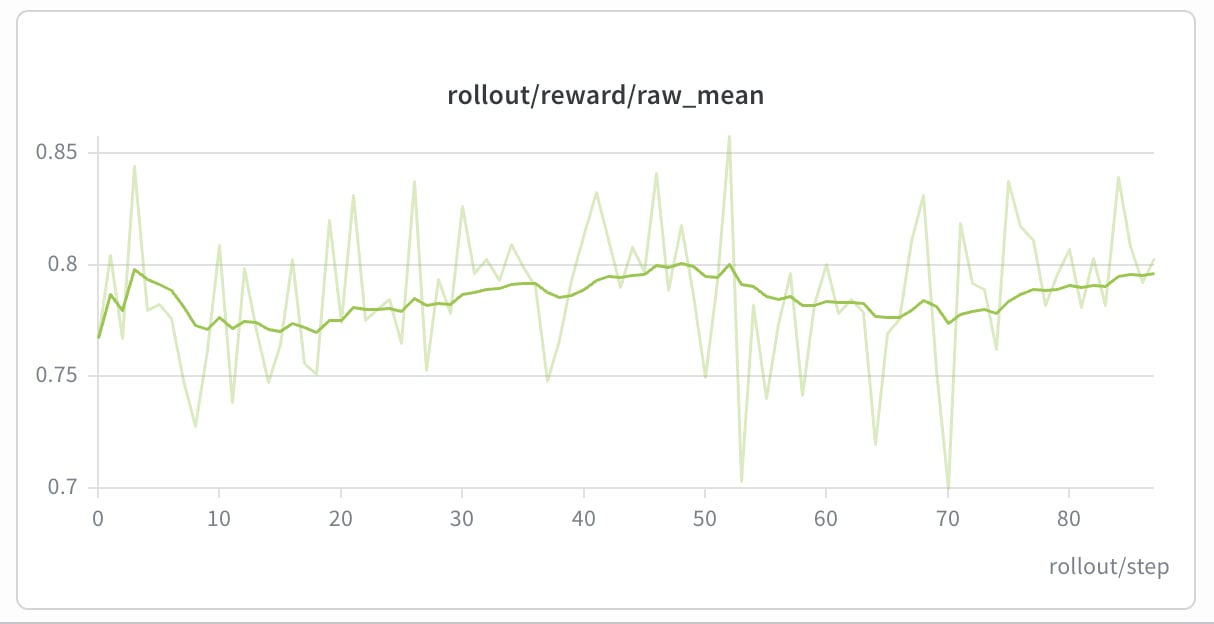
rollout/reward/raw_meansits around ~0.79 (64 samples / step; noisier than eval).